Perspective
The two schools of liquid content
The short version
Liquid content has two halves. Creation assembles a story from a live event; distribution reshapes a finished story for every surface. Both meet at the story, and both run on the newsroom's own reporting, so nothing ships that the newsroom did not report.
Most conversations about liquid content start in the same place. A story is published. Then it flows into the feed, the vertical video, the newsletter, the AI answer. Same story, different shape. That picture is right. It is also only half the pipeline.
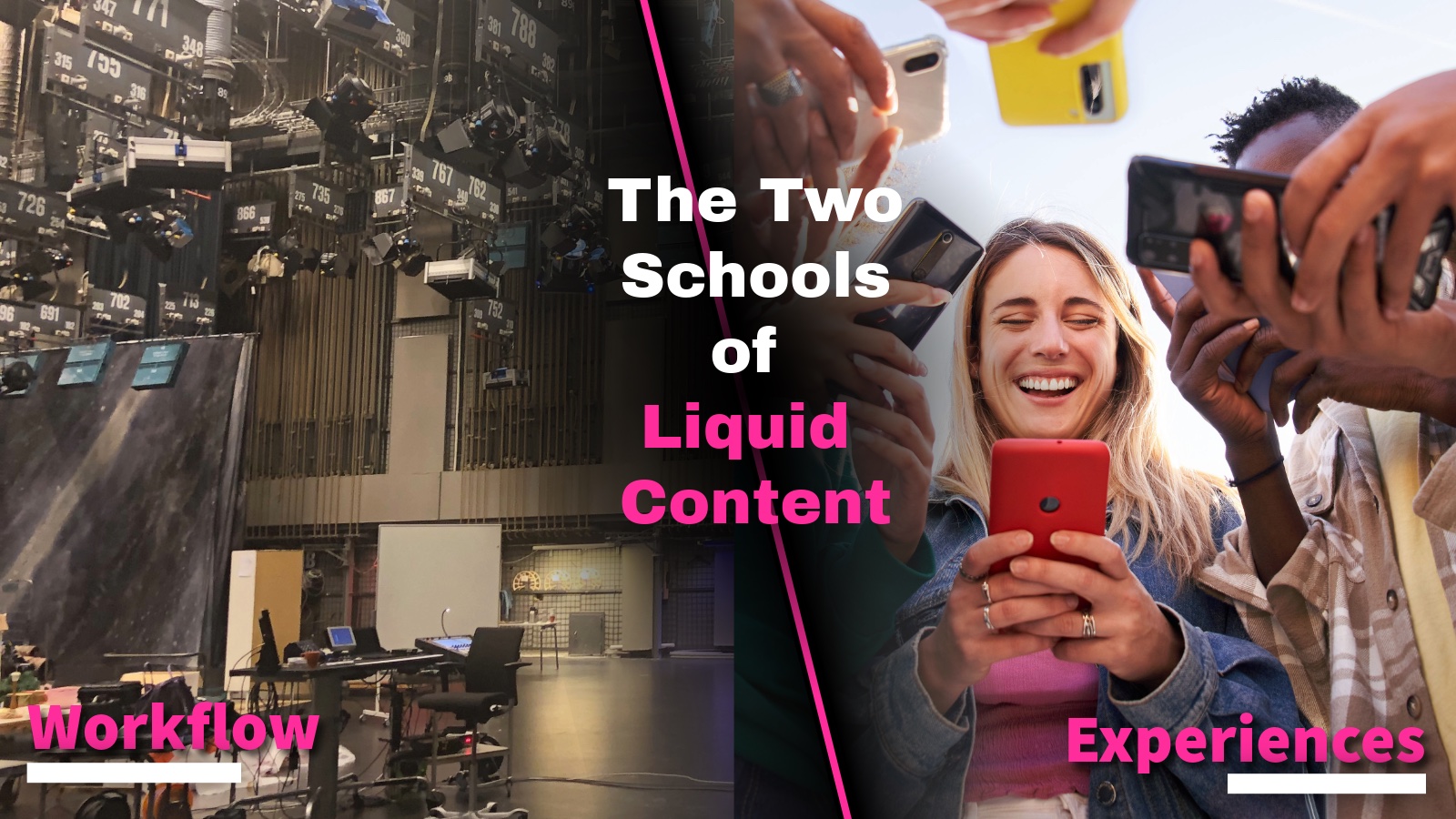
The other half starts earlier than most people think. It starts at the event.
The half everyone talks about
Start with the familiar half, because it is real and it works.
A finished story leaves the newsroom and your audience is scattered across a dozen surfaces. One reader wants it in their morning newsletter. Another will only ever see it as a thirty second vertical. A third asks an AI assistant a question and gets an answer stitched from somewhere. Today a person reformats for each of those by hand, or the story simply never arrives in the right shape and the audience moves on.
HyperContent™ closes that gap. The human authored story flows into every surface with the facts, the quotes, and the voice intact. The engine does the reformatting. The journalism stays exactly where it was. Same story, different shape.
This is the part of the model the industry has mostly agreed on. Automation replaces manual reformatting, not reporting. It is the argument I made in the earlier post on the on-ramp, not the rebuild.
Keep that half in mind. Now look at where some stories actually begin.
The half that starts at the event
Not every story begins as a finished article. Some begin as an event and a stream of facts. A match. An election night. A game. A live feed. Raw reporting coming in faster than any desk can type it into clean prose.
Take a football match. No clubs, no names, just the shape of the night.
The newsroom has a feed of what is happening on the pitch. Goals, cards, substitutions. The run of play and the context your reporters bring. From that single feed, three stories need to exist at three different moments. A halftime story while the audience is arguing about the first forty five minutes. A full time report the instant the whistle blows. A considered post game piece once the dust settles.
The facts are the same across all three. What changes is the moment, the length, and the angle. A desk writing each of those from scratch, live, is in a race it cannot win. The audience is already on their phones reacting while your report is still being drafted.
This is the creation half. The newsroom captures the reporting. An engine assembles the story from journalist written templates, built in advance by the people who know how a halftime story should read and how a full time report should land. The reporting is yours. The shape arrives on time.
One pipeline, meeting at the story
Creation and distribution are not two products. They are two spans of one pipeline, and they meet at the story.
Liquid story creation
Atomic creation
Source → Story · the left half
- Source is raw reporting: quotes, data, images, long form video, captured without deciding a format
- Editorial judgment is absent, so the system originates the story
- The system assembles the story from scratch
- Where live events and feeds begin
Liquid story distribution
Format conversion
Story → Experiences · the right half
- Source is a finished, published story, the gold master
- Editorial judgment is already baked in, so no extra step is needed
- Decompose into atoms, recombine into every audience format: reels, feeds, newsletters, AI answers
- The preferred default for most newsrooms
Zoom into that one pipeline and the same flow looks like this.
A sports desk living on live events may use both halves end to end. The match produces the story. The story flows into every feed and format the audience lives in. A features desk may never touch the creation half at all. Their stories begin as writing, not as an event, so they use distribution alone. Both are the same pipeline. You use the span you need.
Underneath it is one unit of work. Facts, quotes, context, and voice. The atoms of a story, created once by your newsroom, then used downstream however the moment demands. That is what makes the content liquid. Not the automation. The reporting itself, held as something that can take any shape without losing its truth. From the event, every story. From the story, every shape.
Who holds the pen
This is where the model earns trust or loses it, so be plain about it.
Humans craft the templates. The engine runs the flow.
The templates are editorial work. A journalist decides how a halftime story opens, what a full time report must include, what voice the desk writes in. That judgment is encoded once and applied at volume. People still make the editorial call on what ships. Humans stay in the loop at every point that matters.
And the source of truth never leaves the building. We assemble from the newsroom’s own reporting. We don’t manufacture. If a fact is not in your reporting, it does not appear in the story. No invented quotes. No filled gaps. No claims your journalists did not make. The engine carries the volume. The newsroom carries the truth. That line does not move.
Why the second half matters now
The creation half matters most exactly when the shape gap is most expensive. Live events.
When a match is on, an election is being called, a game is in its final minute, the audience is not waiting for tomorrow’s edition. They are on the feed as it happens, reacting in real time, deciding in seconds whether your coverage is the one they trust. A manual pipeline cannot keep pace with that. The story arrives after the moment has passed, and the moment is the whole point.
This is the span where a few minutes of delay is the difference between being the source and being an afterthought. The creation half exists to close that gap while your journalists do the work only they can do.
The whole model
Liquid content is bigger than the half the industry usually discusses. Publishing into every shape is real and it is valuable. But the model starts earlier, at the event, with the reporting itself. From the event, every story. From the story, every shape.
Both halves do the same thing. They take your newsroom’s work and carry it to where your audience already is, at the speed the moment demands, without touching the journalism. They amplify the people who do the reporting. They do not replace them.
If you want to see how this works on your own coverage, we will run a demo on your content. Or start with a half day workshop and map your own pipeline, both halves, before you commit to anything. Come see it on your own content.
Meet your audience where they actually live.
Questions
We spell these out because the same words carry different meanings across the industry. Even story means a dozen things depending on the desk, so here is how we use each one.
- What is liquid content?
- Liquid content is a newsroom's reporting held as reusable atoms, the facts, quotes, context, and voice, so one story can take any shape a surface or audience needs without losing its truth.
- What is the difference between liquid story creation and liquid story distribution?
- Creation assembles a story from an event and the reporting captured around it, a match, an election, a live feed, using templates journalists wrote in advance. Distribution takes a finished story and reshapes it for every surface the audience uses. Both halves meet at the story.
- Does liquid content replace journalists?
- No. People craft the templates and make the editorial call, and the engine carries the volume. Every output traces back to the newsroom's own reporting, so if a claim is not in the reporting, it does not ship.