Continuous Value
The story
is the standard.
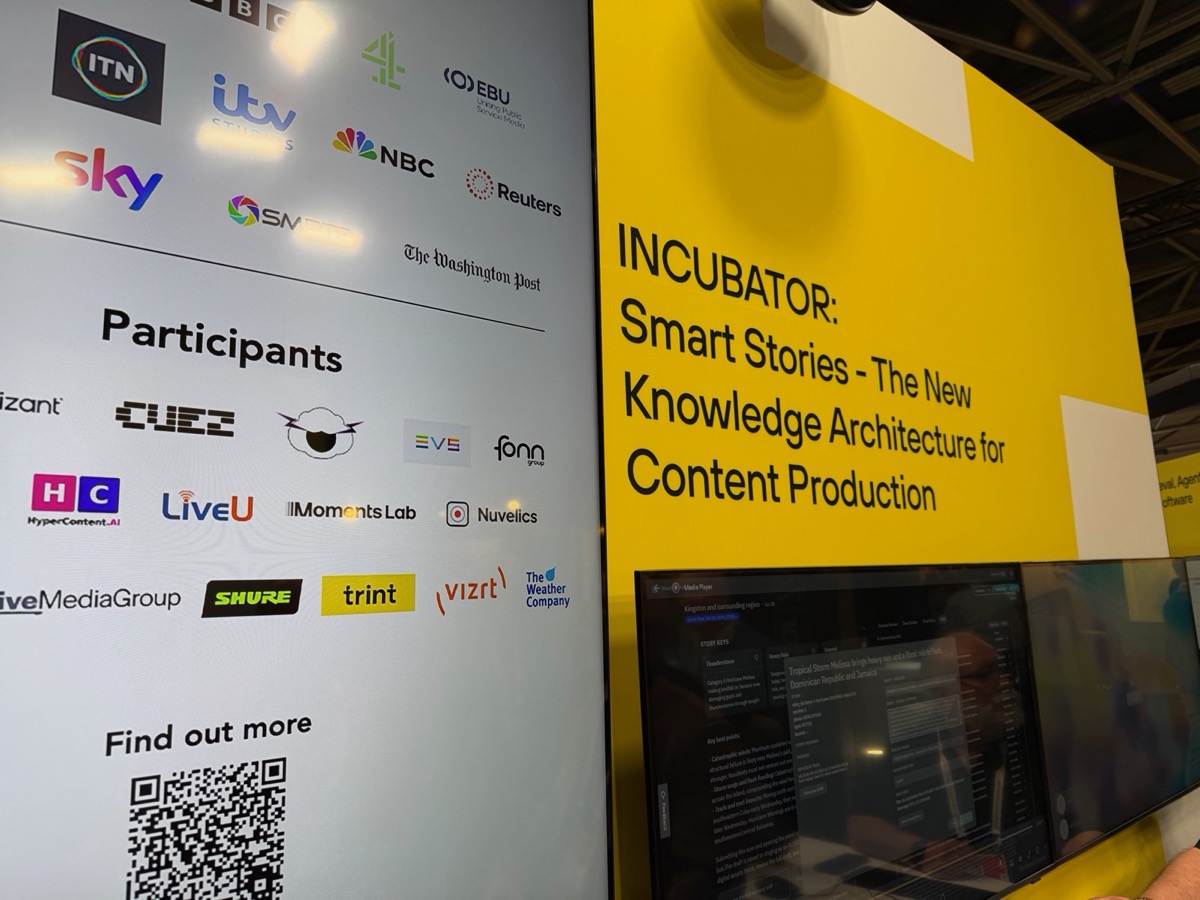
The Story Object Model gives every tool in a newsroom one shared understanding of what a story is. HyperContent™ helped bring an AI native workflow onto it, and we help you adopt it, integrate it, and run the bus it needs.
What it is
An open standard for the story itself.
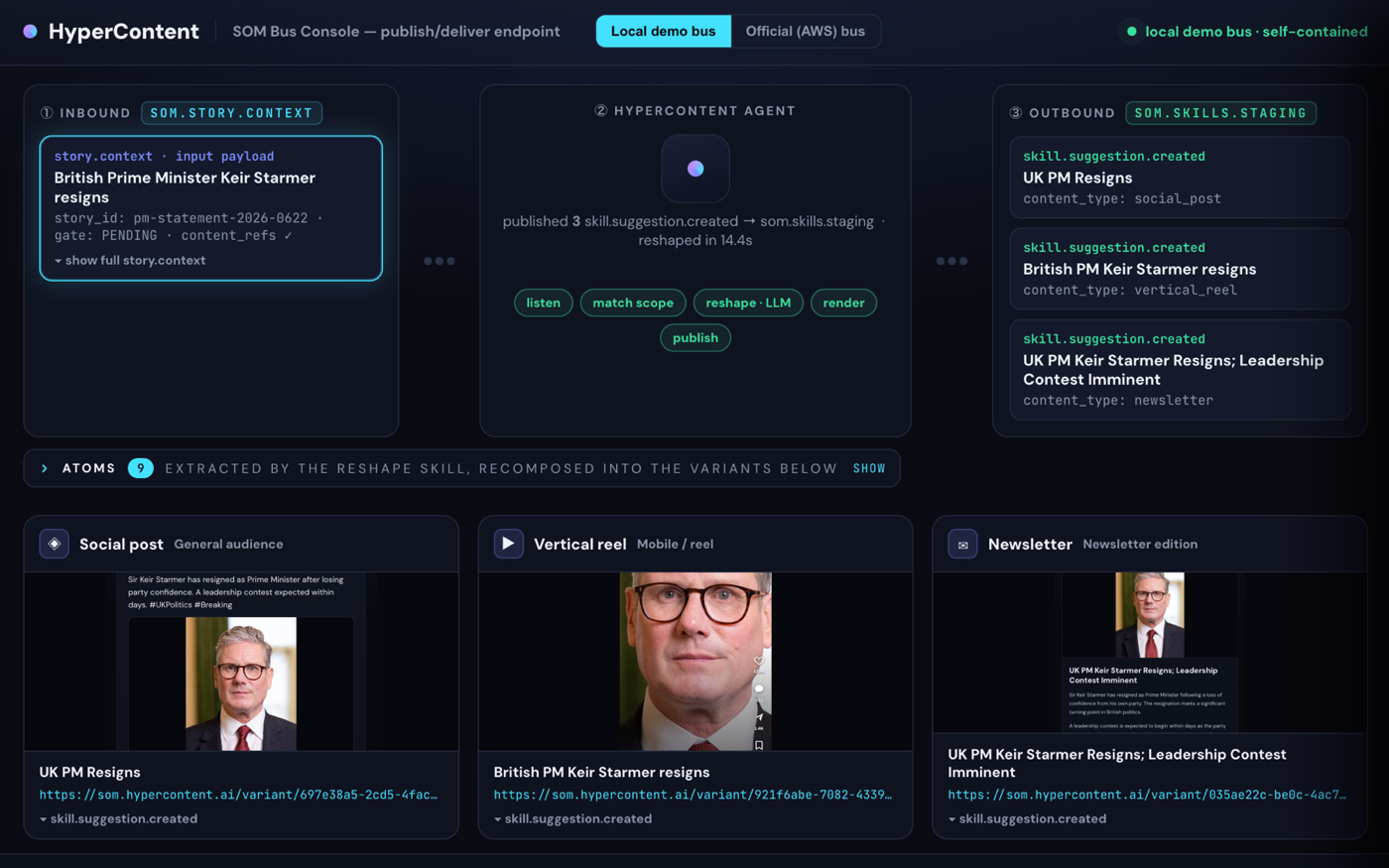
The Story Object Model is an open message standard for newsrooms. It makes the story a first class object that every tool can subscribe to. Context, provenance, and machine readable editorial guidelines travel with the story rather than sitting in one vendor's database.
Human control stays exactly where it belongs. The machinery follows. That is the same move the industry made with MOS, one layer up: composition beats the monolith, and the standard is what makes the separation portable.
Every message is a JSON envelope around a payload
- som_version
- message_id
- correlation_id
- message_type
- timestamp
- originating_system
- topic
What SOM leaves to the bus
The standard defines the messages, not the infrastructure.
SOM defines no broker, no delivery guarantees, no ordering, no identity, and no authorization. Someone has to run all of that. For newsrooms where publishing never waits, that someone has to be good at it.
-
Broker
Something has to carry the messages between systems.
-
Delivery and ordering
Messages have to arrive, in the right order, reliably.
-
Identity and authorization
Systems have to prove who they are and what they may do.
-
Support
When the bus stops, someone has to answer the page.
How HyperContent helps
- 01
Adopt the standard
We help your newsroom or your vendors make the story a first class object, so context, provenance, and editorial rules travel with it instead of living in one tool's database.
- 02
Integrate your systems
Connecting a system to the bus is configuration, not a sprint. Keys, not code. Each tool subscribes to the story and receives the shape it needs.
- 03
Operate the bus
SOM leaves the broker, delivery, ordering, identity, and authorization to whoever runs the bus. We can run it for you, with the same operational discipline we bring to every system we operate.
In the press
The Story Object Model in the coverage.
Field Notes
Understand SOM through the detail.
-
MOS vs SOM: what each newsroom standard is for, and why you need both
MOS lets the newsroom system drive the devices that put a rundown on air. SOM shares the story itself with every system around it. The two standards compared, side by side.
-
The story-centric newsroom workflow, from the wire to every platform, in SOM
How a newsroom turns wires, the diary, and tips into stories told on TV, web, and social, who does each step, and how the Story Object Model describes every stage.
-
The tools in a newsroom, by category, and where each fits in SOM
Newsroom systems, wires, graphics, automation, prompters, media management, web publishing, verification, AI, and dashboards: what each does and how it meets the Story Object Model.
-
Who runs the bus?
An operations reading of the Story Object Model 1.0. SOM gives a newsroom one shared description of a story. What it deliberately does not give you is a broker, a delivery guarantee, an authentication model, or an answer at three in the morning.
-
A bus you are allowed to break
Ten days after writing that somebody has to run the bus, we built one and broke it. What SOM 1.0 taught us from the operator's chair.
Working with the Story Object Model?
Talk to us about SOM integration and operating a SOM bus for your newsroom or your vendors.
Talk to our standards team