Perspective
The new moats: what LA Tech Week taught me about defensibility in an AI Native world
The short version
When AI collapses the cost of building, defensibility moves to three places, what you own, who chooses you, and what people can trust. Premium publishers already hold all three in their owned reporting, trusted brand, and provable provenance. In a world drowning in synthetic output, verifiably human reporting is the asset that appreciates.
The same question came up in room after room across LA Tech Week. Founders asked it. Investors asked it back. If AI means anyone can build your product in a day, what is your moat?
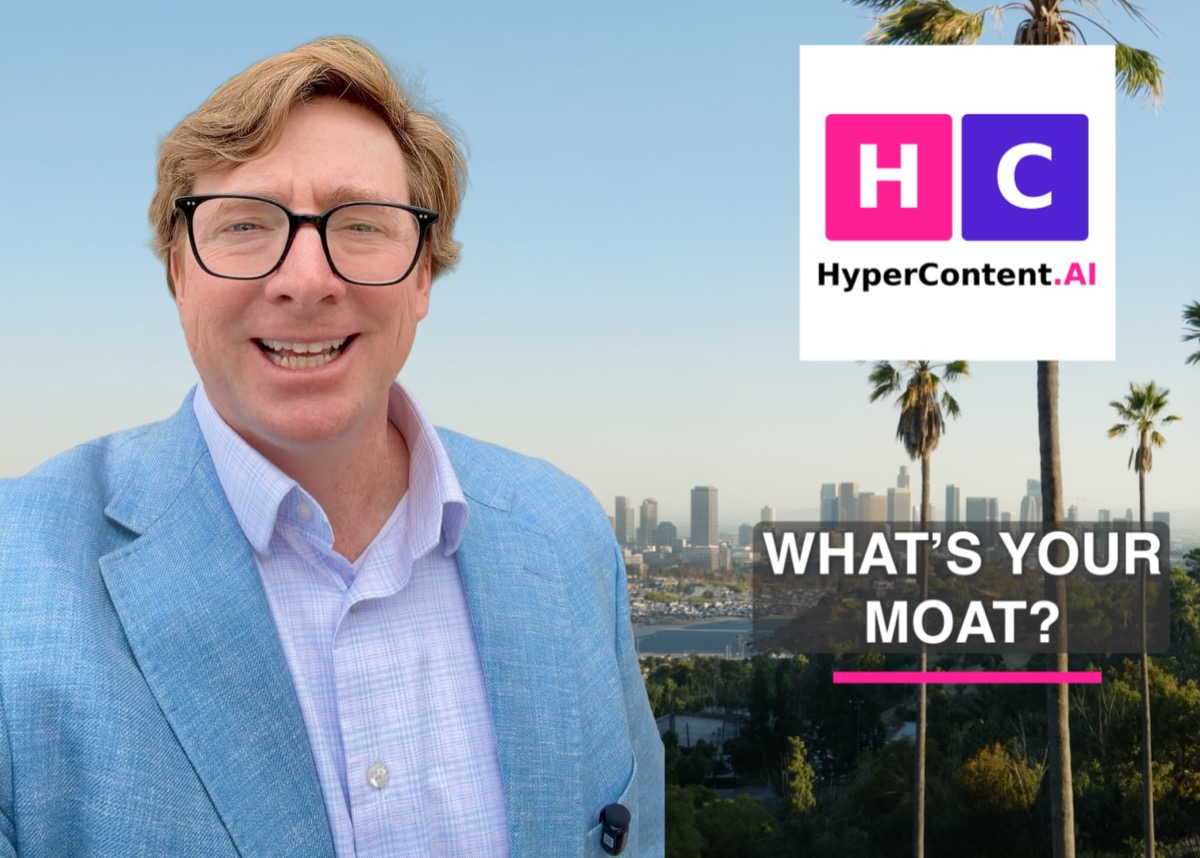
It is a fair question. It is also the wrong one to panic about, because the answer kept pointing in a direction most publishers have not looked yet. When AI collapses the cost of building, defensibility does not disappear. It moves. It moves to three places: what you own, who chooses you, and what people can trust.
Premium media companies already hold all three. Most just are not using them yet.
Moat one: what you own
Software alone is no longer defensible. That was the clearest consensus in the room. If your advantage is a feature set, assume it gets cloned by the time you finish describing it.
So where does ownership still hold value? One investor panel kept returning to the same three things: proprietary data built through real usage, hardware, and go-to-market relationships that take years to replicate. Those do not fall out of a model. They accrue.
A Mucker panel sharpened the point. The team behind Waffle Video described generic footage racing to the bottom. When anyone can generate a passable clip, passable clips are worth nothing. What holds value is structured, high quality, sensor-matched data. Content with context. Content you cannot fake into existence.
Sit with that for a second if you run a newsroom. A publisher archive is exactly this kind of asset. Decades of reporting. Verified facts. Original interviews. Photography shot on location by people who were there. That is proprietary data built through usage, and it took years no competitor can compress.
I have watched publishers treat this archive as a cost center. Storage. Legacy. Something to migrate off of. It is the opposite. It is the moat. The reporting you already own is the thing a model cannot reproduce, because the model was never in the room.
Moat two: brand is becoming the business
Here is the shift that matters most, and the one publishers are best positioned to win.
Tracy Maddux, former interim CEO of BeatBread, put it plainly: the value is between the content and the consumer, not with the artist or the distributor. Read that again with a newsroom in mind. The value is in the relationship. The trust. The reason someone chooses your voice over the infinite alternatives now available at zero cost.
The numbers back the direction of travel. YouTube viewership is reportedly nearly double Netflix’s. Attention is not flowing to the biggest library. It is flowing to trusted voices and the relationships they have built with an audience that keeps showing up.
This is the part founders in other industries are scrambling to manufacture. They are trying to build brand from nothing while AI commoditizes their product underneath them. Publishers do not have that problem. A trusted masthead is a moat a model cannot copy. It took years, sometimes a century, to earn. It carries weight no generated output will ever hold, because the weight comes from a record of being right and being accountable.
The hard truth is that owning the relationship is not the same as owning a homepage. Your audience has moved to feeds, newsletters, and screens you do not control. The brand is still a moat. But it only works where the audience actually is. The job is to carry that trusted voice into those surfaces without diluting it. Same masthead. Different shape.
Moat three: provenance and verifiably human work
The third moat is the one forming right now, and it is the one I would build toward hardest.
When everything can be generated, the scarce thing is proof that something was not. Provenance becomes defensible. So does verifiably human work.
The panels circled this from a few angles. Defensible factors now include user experience, licensed clean content, and strategic relationships. On the studio side, the expectation is split. Full adoption of AI for production runs alongside a premium market for live, in-person, verifiably human experiences. Both grow. They do not cancel each other out. The gap between them is where value concentrates.
There is a practical edge here too, and publishers should hear it clearly. Document human authorship. Document where AI was involved and where it was not. Acquirers are already scrutinizing AI use in content pipelines. Human-created assets are protectable in ways generated ones are not. If you cannot show your chain of authorship, you cannot defend the value of what you made.
I keep coming back to this because it inverts the usual fear. Newsrooms worry that AI erodes the value of human reporting. In a world drowning in synthetic output, verifiably human reporting is the asset that appreciates. The provenance you can prove is the moat others will spend the next decade trying to buy.
Where we draw the line
This is the thesis behind HyperContent™, and it is why we drew the line where we did.
We reshape. We do not generate. Every output traces back to your source reporting. There is no invented fact, no synthetic voice, no content that appeared from nowhere. When you transform a published story into a format built for a feed or a newsletter, the lineage holds. You can show exactly where it came from.
That is a deliberate choice about which moat we are standing on. Your owned reporting, your brand, and your provenance form a stack worth defending. Our job is to carry that stack into the surfaces your audience already uses, with your editorial voice intact and your chain of authorship documented.
It also shapes how we think about our own work. The temptation in AI is to ship features and call it progress. Features get cloned. What does not get cloned is continuous value built on top of assets a competitor cannot replicate. We would rather compound your advantage than race you to the next commodity capability.
The real takeaway
The fear underneath that LA Tech Week question is that AI erases what you built. It does the opposite. It erases what was never defensible in the first place. Generic output. Thin features. Products whose only moat was the cost of building them.
What survives is what took time. Reporting you own. A brand people choose. Work people can trust because they can see where it came from. Publishers are holding the exact three assets that become more valuable as building gets cheaper.
Bigger vision. Sharper brand. Real defensibility.
So I will ask you what everyone kept asking me. What is your moat? If you run a premium media company, you are already standing on it. I put the same question to camera at LA Tech Week, and you can watch the short on our news page. If you run product or digital strategy at a premium publisher or broadcaster, come see it on your own content.
Questions
The questions the moat conversation kept surfacing at LA Tech Week.
- What are the new moats in an AI native world?
- When AI collapses the cost of building, defensibility moves to three places: what you own, meaning proprietary data, distribution, and relationships; who chooses you, meaning brand; and what people can trust, meaning provenance and verifiably human work.
- Why is brand becoming more valuable as AI scales?
- When AI can generate endless content, the brand is what audiences choose and return to. A trusted masthead took years to earn and carries a record of being right and accountable that a model cannot copy.
- How do publishers defend against AI commoditization?
- Publishers already hold the three moats: owned reporting, a trusted brand, and provenance they can prove. The work is to carry that into the surfaces audiences use while keeping the chain of authorship documented.